
A History of Biu — Dr. Bukar Usman, D.Litt, OON
Biu Emirate Studies Series (BESS 003) · First published 2015, reprinted 2022 · Klamidas Communications Ltd, Abuja · ISBN 978-978-52656-8-2
All historical content on this page is drawn from and attributed to Dr. Bukar Usman's monumental research — described by Professor Sa'ad Abubakar (University of Abuja) as "a major contribution to African and Nigerian historiography."
Location and Physical Features of Biu
As Dr. Bukar Usman opens in A History of Biu, the name "Biu" — traditionally spelt Viu — carries a triple prominence embedded in its three letters. First, it is the first city of the Babur/Bura people and a provincial hub of commerce and cultural renaissance. Second, it is the capital of a local government area, a role it has held since 1918 when the British created the Biu Division. Third and most significantly, it is the headquarters of Biu Emirate. The emirate's roots date back to 1535 and it currently comprises more than 50 communities across four local government areas — Biu, Hawul, Kwaya-Kusar, and Bayo — with an estimated population of over half a million people.
Although "Biu" is the popular and official spelling, "Viu" is the traditional pronunciation among the Babur/Bura people. The word means "something high up," a direct reference to the plateau on which the city sits. When British administrators arrived, they changed "Viu" to "Biu" so as not to confuse it with the English word "view." In all official colonial documents the traditional spelling was replaced, and gradually everyone — including the indigenous people — adopted the new spelling. The plateau itself, however, remained exactly where the ancient hunters had first chosen it.
Biu is located at latitude 10.6111° and longitude 12.1950°, approximately 765 metres above sea level. To its north lies the Sheikdom of Borno Emirate; to the east and west, the Emirates of Adamawa and Gombe respectively. The emirate covers about 7,101 km² across its four local government areas. Biu is accessible by road from across Nigeria — approximately 678 km from Abuja, 193 km from Maiduguri, 126 km from Gombe, and 220 km from Yola. Those coming by air may land at Maiduguri, Yola, or Gombe airports and travel by road to Biu.
"Biu has a triple prominence embedded in its three-letter name... its privileged position as the headquarters of Biu Emirate, whose roots date back to 1535."
— Dr. Bukar Usman, A History of Biu, Klamidas Books, 2015Topography, Soil and Climate
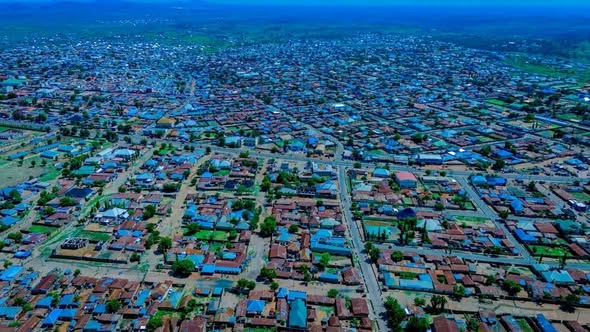
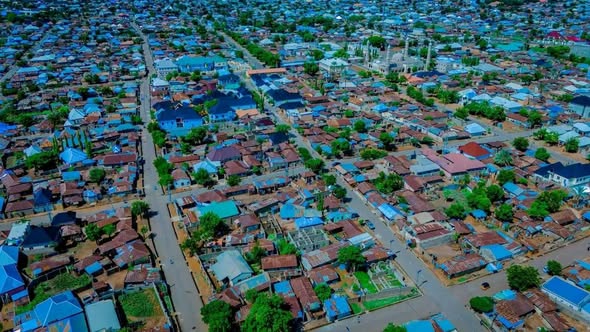
Biu town lies on the Biu Plateau, known for its precipitous escarpments that stretch over a wide area close to the River Hawul and overlook the River Gongola and the Adamawa landscape. The plateau is fed by the rivers Hawul, Divana, Ruhu, Mandafuma, Manda Kisim, Sabil Hili, Manda Mbula, and others — the Hawul being the largest. The emirate embraces both the Sudan and Guinea savannah zones. The streets of Biu town are lined with neem and ficus trees, while across the wider emirate grow tamarind (mbula), shea butter (fumwa), desert date (kurna), bamboo (kida), and baobab — called kogu in Babur/Bura — that gave the historic former capital its name.
Biu's climate is considered the most clement in north-eastern Nigeria, owing to its elevated position. At 765 metres above sea level, Biu is more than twice the altitude of Maiduguri (300m) and significantly higher than Yola (163m). Its annual rainfall of 102–127 cm far exceeds Maiduguri's typical 76 cm or less. The rainy season runs from late March to October, heralded by westerly winds. Biu whirlwinds are mild and do not usually cause the damage commonly experienced elsewhere. Lightning conductors were introduced in Biu in 1950, eliminating a string of earlier lightning disasters including the killing of two men at Tilla in 1928.
Tilla Lake and Tourist Sites
Among Biu's most notable physical features is Tilla Lake, a crater lake approximately 7 km south-west of Biu town in Hawul Local Government Area. Tilla Hill, which overlooks the lake, rises to approximately 883.92 metres — the highest point on the Biu Plateau. The lake, whose size varies by season, is home to sacred crocodiles believed to be the spiritual guardians of the ruling dynasty. According to Dr. Usman, nobody has determined what the crocodiles feed on, since the lake contains no fish or frogs. The Djur (Jur) Waterfall along the Biu-Kwaya Kusar road, about 3 km from Biu town, and the Jaffi Falls near Kwaya Kusar, 6 km off the main road, are further attractions. The dramatic flat-topped volcanic hills — Gwaram, Mandaragrau, Gashina, Zobi, Gondi, Kidi, Vivitu — form the distinctive silhouette of the plateau landscape.
The Origin of Biu Kingdom
In A History of Biu, Dr. Bukar Usman traces the pre-colonial origins of Biu Kingdom in detail. Before the arrival of any central monarch, the Biu area was peopled by indigenous groups who generally spoke Bura language and lived in fairly independent communities. As one oral source recorded in 2014 states: "The Bura people in the beginning lived in clusters of clan villages protected by village stone walls called michiba or garu pela. Each village was independent of the other. Royal families did not exist. Rather, the clan head was the village head and was called mthlakurdi — lord or owner of the land." By 1000 AD, a large block of tribes had formed in the Biu-Mandara area — including the Bura, Marghi, Kimba, and Chibok — who were the earliest known inhabitants of the region.
Yamtarawala: Founder of Biu Dynasty
The Biu royal dynasty was founded by Yamtarawala — also known as Abdullahi — a Kanuri prince from the palace of Ngazargamu, capital of the powerful Kanem-Borno Empire. Following a succession contest after the death of Mai Idris Katagarmabe around 1524, Yamtarawala lost his bid for the kingship. He departed Ngazargamu with 72 followers and weapons from the royal armoury, declaring defiantly: "Youman teram wallahi ana sultan insha Allah" — "One day you shall see that I am a chief, God willing." The name Yamtarawala, or Yam-ta-Wala (meaning "Yamta the Great"), came from such declarations and from the people's acclamation of him.
His journey first took him to Mandara. He then moved westward into Biu territory, conquering Mandaragrau, Miringa, and Diwa through a combination of military force and cunning strategy. At Miringa, he could not penetrate the town protected by a powerful charm called Mumba. He befriended the chief's daughter, plied her with beer until she revealed the shrine's secrets, then offered the sacrifice needed and destroyed the shrine. When the people of Miringa saw the ruined shrine, they surrendered. He similarly overcame Diwa by learning from the chief's daughter the secret of her father's invincible spear, stealing it, and returning three days later to conquer the town. Dr. Usman records the popular saying that arose among the Biu people: "One Yamta has gone, another has come" — from which Yamtarawala took his celebrated name.
"What emerges from all this web of stories is the undisputable fact that a Yamtarawala existed, and that he did come from Kanuri land to Biu land where he established, through military conquest, a kingdom the ruling dynasty of which, directly traceable to him, has thrived in Biu for over four centuries."
— Dr. Bukar Usman, A History of Biu, Klamidas Books, 2015Establishment and Consolidation of the Kingdom
Yamtarawala first settled at a place called Limbur (or Dlimbur), between Chikwarkir and Mandaragrau, and established his dynasty around 1535. His kingdom ultimately stretched from the River Gongola to Kopchi — roughly 5,000 square miles (8,045 km²). However, he ruled over conquered and unstable domains and was unable to weld the communities into one unified entity. The kingdom became formally secure and widely recognised only around 1670, during the reign of his descendant Mari Watila Tampta.
The spot where Yamtarawala is said to have mysteriously sunk into the ground while seated on his throne still stands today as his tomb in the town of Limbur. His pigtail — cut off by his daughter just before his head vanished into the ground — became the symbol of the dynasty, known as zukumbli, passed from Kuthli to Kuthli. Every Pabir Kuthli wears this pigtail after his royal initiation, and on his death it is cut off and placed in a satchel of all former Kuthlis' pigtails — the mizpar — kept as a talisman by the reigning Kuthli.
The List of Kuthlis of Biu (1535–2020)
As documented by Dr. Bukar Usman, the full dynastic succession from Yamtarawala to the present covers 29 rulers. The dynasty's founding around 1535 makes it one of the oldest in Nigeria — predating the current Sullubawa/Fulbe dynasty of Kano by nearly three centuries. Below are the key rulers and their approximate reigns as recorded in A History of Biu:
Dr. Usman notes that Biu had produced 28 Chiefs by 2014, compared to Kano's 14 Emirs since its Sullubawa dynasty began in 1807. Among the most significant reigns was that of Mari Watirwa (1793–1838), who defeated the Fulani forces of Buba Yero of Gombe and preserved Biu's sovereignty during the period of the jihad. Mari Biya (1873–1891) became the first Babur/Bura king to reside in the present Biu town, establishing its role as the permanent capital from 1878. Kuthli Ari Paskur (1838–1873) is remembered as the founder of the present Biu town, having sent men to clear and build it, though he never lived there due to old age and blindness in his final years.
Settlement History of Biu Kingdom Groups
In Chapter 3 of A History of Biu, Dr. Bukar Usman documents in remarkable detail the origins and founding stories of the principal settlements of the Biu Kingdom. He notes that many communities trace their ancestry to Yemen or to the Lake Chad basin, with Ngazargamu serving as a recurring staging post in their migrations. The following are among the most significant settlements recorded:
Miringa
Miringa, capital of the current Miringa District, is among the most historically significant towns in Biu Emirate on account of its early connection to Yamtarawala. It was one of his first points of contact when he arrived from Ngazargamu. The chief's daughter of Miringa, seduced by Yamtarawala who later married her, facilitated his access to the Mumba shrine, empowering his conquest of this previously impregnable fortress. A legendary story connected to Miringa's abandonment of its former hillside site involves clay model horses erected to protect the town's real horses from epidemic — when wandering Fulani cattle knocked the models down, a terrible sickness killed most of Miringa's horses, prompting the community to relocate to its current site for both protective and water-access reasons.
Kogu
Kogu served as the capital of Biu Kingdom on two occasions — from 1787 to 1793 and from 1794 to 1848, a combined total of over 60 years. The preponderance of baobab trees (called kogu in Babur/Bura) gave the settlement its name. Strategically positioned on the edge of the Biu Plateau, Kogu became the citadel of Biu people against Fulani invasion following the deaths of two Kuthlis — Mai Garga Moda and Mai Garga Kwapchi — in those raids. Mari Watirwa established his capital there after driving out the Fulani around 1795. After the capital moved permanently to Biu town in 1878, Kogu became the seat of the Magira — the most senior female member of the ruling family — and later a royal burial ground and farmland.
Buratai, Kwaya Bura, Kwaya Kusar, Wuyo, Balbaya and Others
Dr. Bukar Usman documents the founding stories of dozens of communities across all four local government areas. Buratai, now the headquarters of Buratai District, derives its name from the Kanuri expression "Bura tai" meaning "catch the Bura," recalling a time of slave raiding. Kwaya Bura was established by three dominant clans — Yakda, Wakawa, and Ngada — in the late 16th and early 17th centuries; the name "Kwaya" derives from msha, meaning red clayey soil used for bodily decorations. Kwaya Kusar traces its origin to a founder named Mari who settled there beside a tamarind tree that still stands in front of the Lawan's Palace. Wuyo, inhabited by Tera people who trace their origin to Yemen, was established when the first settler Sarki Mohammed chose a site where a hen left loosely tied overnight was found alive and had even laid eggs — taken as a sign of good omen. The name Wuyo means "We are the biggest" in their native tongue. Balbaya traces its roots to a founder named Gidigidi who settled at a spring on the plateau, the salty water of which was believed to connect underground with the sacred Tilla Lake.
The Chronological List of Biu Capitals
Among the most striking records in Dr. Usman's book is the list of 16 locations that served as Biu's capital between 1535 and 1904, as the kingdom moved at least 15 times for strategic, defensive, or personal reasons. These were: Limbur (ca. 1535), Mandaragrau (ca. 1537), Miringa (ca. 1540), Dlimbur (ca. 1545), Kunjikarwa (1787), Kogu (1787–1793), Viukuthla (1793–1794), Kogu again (1794–1848), Gura (1848–1873), Viukuthla (briefly 1873), Gura (1873–1878), Viu/Biu (1878–1893), Viukamda (1893–1898), Viu/Biu (1898–1903), Pelaminta (1903–1904), and Viu/Biu permanently from 1904. All these locations were within approximately 8 kilometres of each other. The permanent settlement of Biu was sealed when Kuthli Garga Kwamting was advised by the British Resident in 1904 to make Biu his permanent abode.
Traditional Administration of Biu Kingdom
Chapter 4 of A History of Biu by Dr. Bukar Usman examines the traditional governance structure that sustained Biu Kingdom across five centuries. The Biu chief — known as Kuthli in Babur/Bura, and later as Mai (a Kanuri import from Yamtarawala) or Emir under colonial administration — was at the absolute apex of a layered system supported by traditional title-holders, a royal council, warriors, and administrative officers.
The Early Layout of Biu Town
In pre-colonial times, Biu town was divided into two broad areas: Wuyaku, inhabited by the native Babur, and S'l-Undla, occupied largely by strangers and newcomers. Wuyaku was sub-divided into the wards of Barwi, Drakwatam, Wuyaku, and Galawade, while S'l-Undla had the wards of Garuwashina and Kyang-Kyang. A third ward, Galdimare, was established between 1920 and 1925 by Galadima Wuriwa outside the old city wall, marking the beginning of Biu town's rapid expansion. According to Dr. Usman, oral tradition held that Kuthli Mari Biya — "as if he was an engineer" — planned the town's three main areas with strategic precision, placing the palace at the centre with royal family residences surrounding it and wider community wards beyond.
Chieftaincy Succession
Dr. Usman documents that Yamtarawala established a succession rule whereby the eldest son should always succeed the king. This arrangement simplified the otherwise contentious question of succession for several generations. The most serious disruptions came during the colonial era: in 1908, Maina Abba's legitimate claim to the throne was thwarted by colonial authorities who allowed Kuthli Ari Dogo to continue reigning; and in 1935, Ari Gurgur — "a one-time messenger to the Native Authority" — manoeuvred his way to the chieftaincy stool ahead of Ari Dogo's sons, the first brother-to-brother succession since 1760. Since 1959, the tradition of the heir-apparent succeeding his father has been upheld.
Death, Burial and Installation of a Kuthli
Dr. Bukar Usman records in moving detail the ceremonies surrounding the death and replacement of a Kuthli. "Hyel Knthla!" — meaning "Heaven has fallen!" — was the traditional announcement of the Kuthli's death. Within three days, the kingmakers convened to appoint a successor. The royal burial at Viukuthla (approximately 5 km from Biu town) was accompanied by female members of the royal family singing mournful praise-songs — thlimfwal — sending the deceased to greet his predecessors. Dr. Usman records the moving lyrics of these songs in Babur/Bura with English translation. The installation of a new Kuthli involved being led by the senior kingmakers Kadafur and Birma, raised and seated three times, then turbaned and dressed with the Gari robe and Alkyabba ceremonial dress, presented with a sword, knife, and spear, and led into the palace to be seated on the royal throne. A white ram was slaughtered at the palace entrance. The Durbar of district heads on horseback followed.
The Kingmakers
The Biu kingmakers — a council of eleven comprising Birma, three Kadafur, four Betara, one Thlefur, one Zaifada, and one Chapola — have existed since Yamtarawala's era. The Birma presides and holds a casting vote. The 1989 kingmakers who selected the 28th Kuthli are individually named in Dr. Usman's book, as are the 2012 kingmakers' council. He notes that kingmaker institutions existed in communities across the emirate, with different presiding elders — Keldima in Balbaya, Galadima in Bila and Kubuku, Shledima in Chata and Yimirdlalang, Zarma in Gumburku, and so forth — all maintaining the principle of collective responsibility in leadership selection.
Traditional Titles
Among the titles documented by Dr. Usman for royal family members: Kuthli (the chief), Kadala (the Kuthli-elect before initiation), Midala (the heir-apparent — Midala Shina for the current Kuthli's eldest son, and Midala Gwaram for the former Kuthli's son), Mshal/Maina (son of a Kuthli), Chamalwa (the next eldest son), Maidugu (son of a prince or princess), Kwatam (daughter of a Kuthli), Mairam (princess), and Magira (most senior female member of the ruling family). Non-royal titles included Birma, Betara, Thlefur, Zaifada, Chapola, Galadima, Thledima, Kachalla, and Thlerma — several of these shared with or borrowed from the neighbouring Kanuri culture through Yamtarawala's lineage.
People, Languages and Clans of Biu Kingdom
Dr. Bukar Usman dedicates Chapter 5 of A History of Biu to the people, languages, and clan structures of the Biu Kingdom. Biu is an ethnically plural society. Prominent among its groups are the Babur (Pabir), Bura, Tera, Kanakuru, Chibok, Marghi, Pidlimdi, Jara, Komberi, and Fulani. The Fulani are sub-classified into settled (Kitaku) and nomadic (Bororo) groups. Almost every community is a mixture of many ethnic groups communicating via a lingua franca.
The Babur/Bura Question
Dr. Usman devotes careful attention to clarifying the relationship between the Babur and the Bura — a question he describes as sometimes sensitive and emotive. His conclusion, supported by linguistic analysis, is unambiguous: "Babur and Bura are one and the same language, the only minor difference being in the pronunciation of certain words. Linguistically, Bura and Babur are closer to each other than American English is to British English." The language — Bura — is a Biu-Mandara, Central Chadic language. The Pabir are the ruling class; the Bura form the majority population. Dr. Usman identifies five Bura sub-groups documented by Diggira (1980): Bura Msha (central area, farmers and blacksmiths), Bura Rahi (east Bura, generally short and light-skinned, known for dressing and dance), Bura Ramta (west Bura, notably tall), Bura Kwakura/Kokura (east of Kwaya Kusar), and Bura Dza Kuthli (those associated with the rulership of Biu).
The Clans of Biu
Dr. Usman documents that Biu society is structured fundamentally along clan lines, with over 100 clans providing the social architecture of kinship, marriage rules, inheritance, and community roles. The clans are patrilineal. Marriage within most clans is exogamous — same-clan individuals are forbidden from marrying. Among the clans documented are: Dawa, Dibal, Diya, Ganga, Gawa, Gwagwa, Kadi, Malgwi, Mbaya, Minta, Ndahi, Ngada, Nganjuwa, Tarfa, Waksha, Woviri, Zoaka, Balami, Bula, Bwala, Dagil, Boti, Mbala, Mazila, Kuthla, Yizza (Iza), Hindi, Wakawa, Diramza, Mshelshambar, Ndiri, Mshel Liya (Mshelia), Gasi, Msheltila, Dzauni (Jauni), Sura, Chara, Abla, Vula, Dugja, Ngera, Hena, Galku, Gwari, Dirkwa, Yidawi, Ndogu, Madi, Hurketa, Shalangwa, Banu, Bassi, and Gurdam, among many others. Six key ways of classifying Biu clan names are identified by Dr. Usman: by profession (e.g. Galku — blacksmiths; Bwala — horse and donkey tenders; Malgwi — tanners), place of origin, objects, royal family connection, founder's name, and other criteria.
Cultural Practices of Biu Kingdom Groups
Chapter 6 of A History of Biu by Dr. Bukar Usman presents a rich panorama of the cultural life of Biu Kingdom groups — their folktales, tribal marks, marriage customs, music, dance, and festivals. As Dr. Usman writes, "culture is what bonds together the various clans and groups of Biu Kingdom and this cultural force was so strong that it survived the culture conflicts of the colonial era."
Folktales
Folktales — called makumthla yimi-yimi in Babur/Bura — were the most prominent aspect of Biu folklore. They were the vehicles by which children were informally educated through entertaining stories that delivered moral lessons and explained natural and supernatural phenomena. Characters include human beings, animals, spirit beings, trees, and rivers. The hyena in Biu tales is consistently foolhardy and dim-witted; the squirrel is clever and self-restraining. Dr. Usman notes that the cultural educator Albert D. Helser was able to derive ten distinct moral objectives from a single ten-paragraph Biu folktale titled "The Hunter and the Lion" — covering virtues such as sympathy, bravery, cleanliness, and gratitude. Alongside the folktale was the makumthla dza-dza — an intelligence-enhancing question-and-answer quiz that formed a cornerstone of informal education in the pre-colonial kingdom. Dr. Usman collected over 1,000 folktales within two years in the Biu community — a community where Helser himself had collected over 800 tales in the 1920s.
Tribal Marks
In the olden days, tribal marks — especially facial marks — were fashionable and necessary, partly as a means of identification during the era of slave raids. Various marks were cut into the faces of members of different clans: the Babur bore markings of Biu, Bularaba, Dokshi, or Rampta, usually scarified at each side of the mouth or nose, or in the middle of the forehead. Among the Tera, the most popular was yima-yimathla or bura-bura, running from the head to the face. Dr. Usman identifies three evolutionary stages of tribal marks — a simple early stage, a more complex intermediate stage incorporating marks from other tribes, and a reduction phase from about 1937, after which facial marks began to disappear from fashion entirely.
Traditional Marriage
Dr. Usman documents in detail the traditional marriage customs of the Babur/Bura, Tera, Kanakuru, Fulani, and Marghi communities. Among the Babur/Bura, marriage was considered a family affair. A girl could be engaged from infancy through the placing of cediya (nina leaf and cowrie shell) with her parents. Regular courtship involved the annual dry-season taduvargyeli — a match-making camp on the outskirts of town where young couples lived together for a few days in makeshift grass booths, doing everything like husband and wife but in strict observance of the taboo against carnal knowledge. This was followed by formal engagement ceremonies involving gifts of kuntu (woven cloth), bumburi (cotton material), and livestock bride price, and a twelve-day wedding celebration before the marriage was consummated. A girl was expected to be a virgin, and her husband announced the verdict — a source of great honour or reproach for the family. The practice of infant betrothal began falling out of fashion towards the end of the 19th century.
Music, Dance and the Royal Band
Common musical instruments across Biu communities included ganga (drum), algeita (oboe), timbul (horn), tsǝndza (xylophone), gullum (guitar), tibilau (flute), gashi (long trumpet, reserved for royals only), dlimbwar (big drum for major announcements or wrestling), and humbutu (played to mourn the dead). Dr. Usman lists 33 notable musicians and musical troupes from across all four LGAs, from the Biu Royal Band and Yanga Sakwa (Biu LGA) to Zabiya (Bayo LGA), Bola Kwajaffa (Hawul LGA), and Kida Kinjirnga Kurba Gayi (Kwaya Kusar LGA). The royal band of the Kuthli performed in four weekly sessions — from Thursday evening through to Friday afternoon — always concluding with the celebrated tune of Mala Modimi, the Biu algeita master who won an inter-emirate contest against performers from Chad and Cameroun with his haunting Babur/Bura tune: Kuthli a la Viurahi / Kuthli a la Viukuthla — "The King goes to Biu Town / The King goes to the royal cemetery." This tune, which praises the Kuthli's majesty while reminding him of his mortality, has accompanied every Biu royal funeral procession to Viukuthla to this day. Dance forms across Kwaya communities included kwakuna, leu-leu, barbara, mathle, and munmweri-dzarburbudu, among many others.
Festivals
Dr. Usman notes that every Biu Emirate community celebrates traditional or religious festivals, with Kwaya Kusar communities having particularly preserved their traditional feasts. Traditional festivals in and around the kingdom generally celebrate life, fruitfulness, and productivity, or mark the anniversaries of historical or religious events. The taduvargyeli — Biu's annual match-making camp for young adults — was one of the most distinctive social institutions of pre-colonial Biu, though it has since fallen into disuse as the youth pursue modern-day activities.
Arrival of the British & Colonial Rule in Biu
In Chapter 7 of A History of Biu, Dr. Bukar Usman traces the path by which British colonial administration reached Biu Kingdom. British annexation of Lagos in 1863 was the beginning. By 1898 the North was secured through the Royal Niger Company. Biu Kingdom did not feel the heat of colonisation, however, until 1902 — when Britain, having proclaimed the Protectorate of Northern Nigeria in 1900, established a military camp at Gujba following the killing of Rabeh Zubayr's son Fadel Allah there on August 23, 1901. Lord Lugard was appointed Governor of both Northern and Southern Nigeria in 1912, and the two protectorates were amalgamated in 1914.
The ruling Kuthli at the time, Garga Kwamting (reigned 1891–1908), chose pragmatism over confrontation. In 1904 he moved the capital permanently to Biu town and pledged loyalty. He was recognised as a 3rd Grade Chief and received his Staff of Office at a ceremony in Magumeri. He was instructed to make Biu his permanent residence — and all Biu Chiefs since 1904 have permanently resided there. He died in 1908, the same year he received his Staff of Office, having reigned for 17 years.
"The tenth and last military patrol to firmly bring Biu territory under effective British colonial administration was undertaken in January 1918. In that same month 'Pagan Division' was discontinued and Biu Division constituted."
— Dr. Bukar Usman, A History of Biu, Klamidas Books, 2015His son, Mai Ari Dogo, continued the policy of cautious cooperation. In 1914, political officer Mr. J.H.C. Elder moved from Gujba to Biu on November 12 to manage the unwieldy "Pagan Division" — a vast territory stretching from Bedde (now Yobe State) to the Marghi District of Askira. January 1918 was a landmark year: Biu Division was formally created, Western education began in Biu, the Kuthli was promoted from 3rd to 2nd Class Chief, and the tempo of road construction increased significantly. On January 20, 1920, the Governor of Nigeria, Sir Hugh Clifford, and the Lieutenant Governor of Northern Nigeria made their first joint high-level visit to Biu — it was also the first time a motorcar had been driven into the city. In 1920, Mai Ari Dogo was formally appointed the first Emir of Biu, and the domain became officially known as Biu Emirate.
Native Authority Administration in Biu Emirate
Chapter 8 of A History of Biu by Dr. Bukar Usman examines how the British Indirect Rule system operated at the Biu Emirate level. Under this system, local government was left in the hands of traditional chiefs, subject to the guidance of European officers. Native institutions were used and interference with local customs kept to a minimum, though the British did not always understand those customs. By 1945, there were 180 Native Authorities across the approximately 40 administrative Divisions of Northern Nigeria, with Biu Division having 3 Native Authorities.
Districts were created as the main administrative groupings. In January 1915, Biu Division was sub-divided into five districts: Tera, East Bura, West Bura, North Bura, and Babur Districts. Further reorganisations followed in 1918, 1921, 1922, 1923, 1924, and 1926 as the colonial administration adjusted boundaries, transferred territories, and consolidated administrative units. By 1930, District Heads were retitled Ajiya (Kanuri for District Head), replacing the earlier term Lawan. The Emir received the title District Head until 1918, when he was upgraded to Chief, and later formally designated Emir of Biu in 1920.
The Native Authority concept put the British, without detracting from their power, in the background, making imposed rule more acceptable to the people. It ensured limited local participation with minimal colonial interference, except to maintain law and order, financial transparency, and to terminate customs deemed "repugnant to natural justice, equity and good conscience." Dr. Usman lists all former British Administrative Officers who served in Biu from 1918 to 1956, noting that the first aeroplane landed in Biu in the first half of 1955.
Biu City, Districts and Local Government Areas
Chapter 9 of A History of Biu covers Biu's growth and administrative expansion in the post-independence era. Nigeria's independence on October 1, 1960 opened a new chapter for the Emirate. Borno State was created in 1976, and subsequent administrative reorganisations confirmed Biu as the seat of both the Local Government Area and the Emirate Council. The Emirate today encompasses four LGAs — Biu, Hawul, Kwaya-Kusar, and Bayo — covering a significant portion of southern Borno State.
The city of Biu has expanded dramatically from its pre-colonial core of three wards into a modern urban centre. Dr. Usman documents the districts of each LGA in detail. Biu LGA includes Miringa, Buratai, Mandaragrau, Biu, Sakwa, Kwajaffa, and Gunda Districts, among others. Hawul LGA contains Kwajaffa, Shaffa, and Marama Districts. Kwaya-Kusar LGA covers Kwaya Kusar, Gongdi, and Jara Districts. Bayo LGA — whose name is derived from the acronym combining the first two letters of "Balbaya" and the last two of "Wuyo" — has Brihyel as its headquarters.
Infrastructure investments during the oil-boom years transformed Biu town significantly. The first major paved road connected the plateau to the national highway network; the General Hospital, the College of Education, the Federal Government College, and various primary and secondary schools were established. Biu hosts one of the largest periodic markets in the sub-region, drawing traders from Borno, Gombe, and Adamawa states.
Western Education in Biu Emirate
As Dr. Bukar Usman documents in Chapter 10 of A History of Biu, Western education in Biu Emirate began in 1918 — the same landmark year as the creation of Biu Division. The pioneer educational institutions were established through cooperation between the colonial government and Christian missionary organisations, particularly the Church of the Brethren Mission (known locally as Ekklesiyar Yan'uwa a Nijeriya, or EYN). By the 1920s, mission schools had been established in several communities of the emirate, with Bura teachers among the first educators sent to neighbouring communities including Lassa.
Dr. Usman notes that the Phelps-Stokes Commission, a missionary-inspired body funded by American organisations concerned with education of Black people, recommended partnership between government and missionaries — a recommendation that shaped British colonial education policy in Africa from 1925. The expansion of Western education across Biu Emirate was gradual but transformative, producing generations of civil servants, teachers, medical officers, lawyers, and military personnel who went on to serve Nigeria at the highest levels.
Girl-child education in Biu Emirate — the subject of Dr. Usman's companion volume in the BESS series — was particularly challenging in the early years. Among the first Biu girls to receive formal education, Malama Pana Ali Pana recalled oral traditions about Biu's future that had been passed to her by her mother, including predictions about the coming of white-skinned men speaking a strange language, and of future generations who would prefer that language to their mother tongue — all of which came to pass.
Economy of Biu Emirate
Chapter 11 of A History of Biu by Dr. Bukar Usman surveys the economic history and current economic profile of the Emirate. Agriculture has been the bedrock of the Biu economy across all periods of its history. The emirate straddles both the Sudan and Guinea savannah agro-ecological zones, with the fertile volcanic soils of the plateau supporting a rich mixed economy of crop farming and livestock herding. Staple crops include sorghum, millet, maize, cowpea, groundnuts, and cotton. Livestock — cattle, goats, sheep, horses, and donkeys — have formed the basis of pastoral wealth for centuries.
The plateau's mineral resources are also documented by Dr. Usman: iron ore, gravel, magnesite, uranium, feldspar, topaz, mica, granite, aquamarine, nephelite, and salt are among the deposits found in the emirate. Biu town hosts one of the largest periodic markets in the sub-region, drawing traders from across Borno, Gombe, and Adamawa states. The modern economy encompasses a substantial civil service workforce, a College of Education, and growing sectors in retail, hospitality, and transport. Dr. Usman also discusses challenges including the long-delayed Biu Dam project and the perennial issue of pipe-borne water supply — noting that as of 2014, neither the Biu pipe-borne water scheme nor the Biu dam had been completed.
Political and Social Developments
Chapter 12 of A History of Biu traces Biu's political and social history from independence to the modern era. Dr. Bukar Usman documents the emirate's integration into Nigeria's successive political structures — from the First Republic through the military era and return to democracy. He notes that the role of the traditional ruler evolved significantly under each regime, with the most sensitive period being the military era when, as he recounts in the account of the 1989 installation of Mai Umar Mustapha Aliyu, the government's directive for the installation to proceed "immediately" and the conveyance of the decision by a Brigade Commander were "aberrations which highlight the militarism of the era."
Dr. Usman also documents Biu's representation in national politics — from the First Republic through successive civilian and military governments — noting the emirate's consistent production of prominent figures in the civil service, the judiciary, the military, the legislature, and the executive. The Biu Forum's mandate, as reflected in Dr. Usman's concluding reflections, is to ensure that this rich political and social heritage is preserved, understood, and built upon by the next generation.
Values, Lifestyle and Sports in Biu Emirate
Chapter 13 of A History of Biu by Dr. Bukar Usman examines the values, lifestyle, and sporting traditions that define the Biu community. The core values documented — honesty, hard work, bravery, patience, obedience, respect for elders, loyalty, kindness, humility, care for the poor, and devotion to God — are the same virtues that animate the thousands of Biu folktales Dr. Usman collected. These values, he argues, are not merely cultural decorations but the structural principles that held the Kingdom together across centuries of external pressure.
The lifestyle of pre-colonial Biu combined agricultural industry with rich social rituals. Wrestling, the taduvargyeli match-making camp, communal farming, and the elaborate cycle of festivals provided structure to the social year. Among the Fulani communities of the emirate, the sharo — a test of manhood and endurance involving young men beating each other in turns with tender sticks, to music and the applause of young women — was a defining rite of passage that remained common into the 1950s, though it has since become rare. The Sallah Durbar — when the Emir receives the homage of his district heads on horseback in a spectacle of colour, music, and pageantry — remains the most celebrated ceremonial expression of Biu's royal culture to this day.
Environment and Tourism in Biu Emirate
Chapter 14 of A History of Biu closes Dr. Bukar Usman's survey of Biu with an examination of the emirate's remarkable natural environment and its potential as a tourism destination. The volcanic heritage of the Biu Plateau makes it one of Nigeria's most geologically distinctive regions, with ancient craters, flat-topped hills, and dramatic escarpments that stretch across the landscape. The Biu Plateau's higher humidity — receiving 102–127 cm of annual rainfall — has allowed it to conserve significant vegetation, including species of botanical and environmental interest rarely found so close to the Saharan fringe.
Tilla Lake — the sacred crater lake 7 km from Biu town — remains the emirate's most iconic tourist attraction, home to the sacred crocodiles associated with the royal dynasty. Tilla Hill at 883.92 metres is the highest point on the plateau. The Djur (Jur) Waterfall along the Biu-Kwaya Kusar road, 3 km from Biu town, and the Jaffi Falls near Kwaya Kusar, 6 km from the main road, are described by Dr. Usman as outstanding natural features. The spectacular chain of volcanic hills across the emirate — including Gwaram, Marama, Mandaragrau, Gashina, Zobi, Gondi, Njurang, Dakwana, Kidi, and Vivitu — each with their own histories and legends, together constitute a landscape of extraordinary cultural and ecological significance.
Dr. Usman documents the fauna of the emirate — mammals, birds, fish, and insects catalogued in the book's appendices — and notes the importance of environmental stewardship for the community's future. He also records the contributions of German explorers and researchers who documented the north-east, including Heinrich Barth (who passed through the Marghi area in 1849–1855), Adolf Overweg, Eduard Vogel, Gerhard Rohlfs, and Gustav Nachtigal — all of whom left accounts that now form part of the historical record of this region.
"For Biu Emirate society, that time has come" — the time when an indigenous people write their own history, from their own perspective, in their own voice."
— Dr. Bukar Usman, A History of Biu, Klamidas Books, 2015 (echoing J.G. Davies' 1956 prophetic remark)Dr. Bukar Usman concludes his monumental work with a statement of purpose: "Whatever the limitations of this book, it asserts our right to capture our past, the good and the bad, from the viewpoint of an indigenous lens." The Biu Forum digital platform carries that same spirit forward — ensuring that the history documented by Dr. Usman reaches every member of the Biu community, in Nigeria and across the diaspora, and that it is preserved for every generation to come.